Collaborative approach to exploring the impact of knife crime
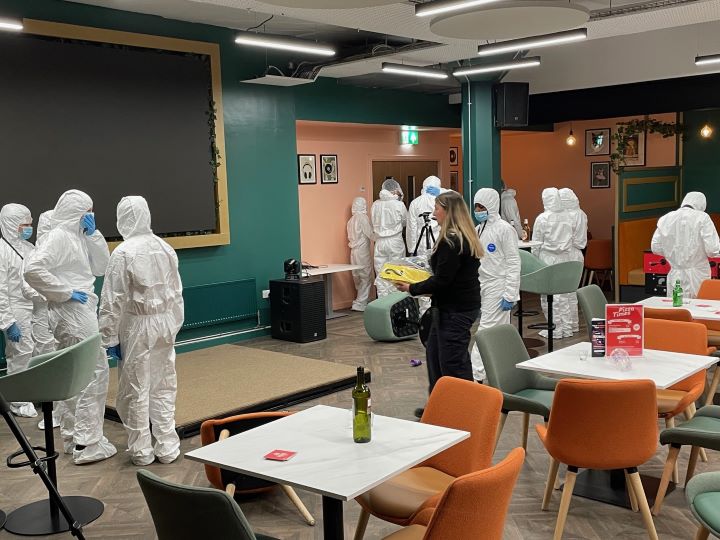
How can universities help young people understand a difficult issue like knife crime in a way that is informative, sensitive, and engaging? Led by West Yorkshire Police, the Junior Detectives programme brings together schools and partner organisations to help young people explore the consequences of knife crime from multiple perspectives. At the University of Bradford, the programme has taken an immersive approach, using the University’s facilities and expertise alongside input from the police and other professionals to bring the investigation to life.
Over recent years, Year 8 pupils from local schools have visited the University of Bradford campus to become ‘Junior Detectives’, tasked with investigating a fictional knife crime. Across the programme, they follow the case from the initial incident through to its consequences for those involved and the criminal justice process.
Recent activities have included examining a mock crime scene using forensic techniques, analysing fingerprints, interviewing the victim while they recover in the University’s mock hospital ward, and questioning the suspect. Pupils have also explored the impact of knife-related injuries with paramedics, considered the psychological impacts of crime with mental health experts, and used the University’s immersive Virtual Reality technology to revisit elements of the investigation and reflect on their findings.
The programme draws on expertise from beyond the University, too. Previous iterations have involved healthcare professionals, the criminal justice system, Crimestoppers, and people with lived experience. In one recent programme, pupils had the opportunity to speak directly with a serving judge, asking their own questions about prosecution, sentencing, and what happens when a knife-crime case reaches court. This collaborative approach helps pupils understand knife crime as something with far-reaching consequences for victims, perpetrators, families, and communities. It also provides an opportunity to encounter professionals, disciplines, and environments that young people may otherwise have little experience of.
Active participation is central to the approach. Pupils formulate their own questions, make decisions about their investigation, reflect on what they have encountered, and ultimately present what they have learned. Crucially, the learning is intended to extend beyond those directly involved. The Junior Detectives model encourages participating pupils to become ‘anti-knife crime champions’, taking their learning back into their schools and sharing it with their peers.
For colleagues working in outreach and widening participation, Junior Detectives shows what can be achieved by bringing together the expertise and resources of different organisations. Hosting the programme on a university campus gives pupils access to specialist facilities, technology, and academic expertise, while working with external partners brings different professional perspectives into the experience. Together, these elements allow young people to explore a complex issue in ways that would be difficult to replicate in the classroom. Junior Detectives, then, offers a great example of how universities can work with external partners to create meaningful learning experiences around challenging issues affecting young people and their communities.
Hannah Parkes, Outreach and Recruitment Officer, University of Bradford